2026 Busy Mom for Kids KDP Interiors
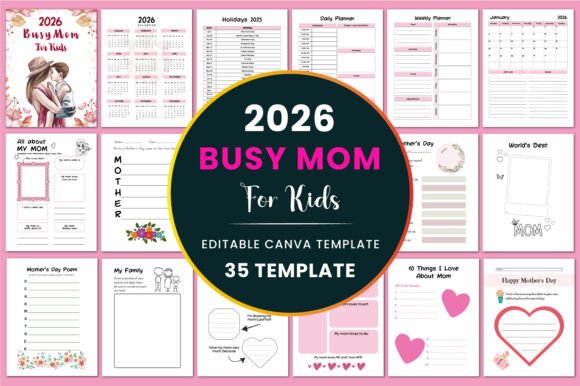
Staying organized while raising kids isn’t about perfection—it’s about having the right tools in place before the chaos begins. The 2026 Busy Mom for Kids KDP Interiors is designed specifically for that reality: a printable, editable planner system that supports daily schedules, chore charts, routines, and activity planning—all within a single, cohesive 2026 calendar framework. It’s not just another generic planner. It’s built with the rhythm of family life in mind—January through December, holidays marked, weekly check-ins included, and space for personalization so moms can adapt it to their child’s age, learning style, and household flow.
Why This Planner Fits Real Life—Not Just Ideals
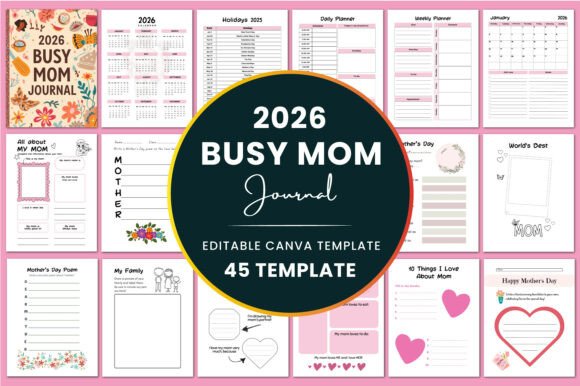
Many planners promise “organization” but fall short when real-world variables enter the picture: school drop-offs, last-minute playdates, unexpected sick days, or even just mismatched energy levels between parent and child. The 2026 Busy Mom for Kids KDP Interiors avoids that trap by including 35 distinct templates—from daily trackers to monthly overviews, Mother’s Day reflections to “10 Things I Love About Mom” journal prompts—all sized at 8.5 x 11 inches and optimized for print (300 DPI, CMYK, no bleed). That means what you design in Canva prints cleanly, without cropped edges or color shifts. It also means you’re not stuck with one rigid format; you can mix and match pages based on what’s working this week, not what looked good in the product preview.
A Common Mistake: Assuming “Editable” Means “Effortless”
One of the most frequent oversights? Treating the editable Canva link as a magic button. Yes, it’s convenient—but editing effectiveness depends on your familiarity with Canva’s layers, text boxes, and export settings. Some users jump in, change fonts, and then discover their customizations don’t align with the original 300 DPI resolution or CMYK color profile. The result? A beautiful digital version that prints washed out or misaligned.
Better approach: Before diving into edits, open the PDF first. Use it as a reference to understand layout hierarchy—where headers sit, how much margin exists around checkboxes, where page numbers appear. Then, in Canva, duplicate the base template and rename each copy (e.g., “Chore Chart – Ages 4–7”, “Homework Tracker – Grade 3”). That way, you preserve the original integrity while building versions tailored to your needs—not just your preferences.
Overlooking File Types—and Why It Matters
The package includes PDF, JPG, and PNG files—but they serve different purposes. PDFs maintain vector clarity and are ideal for printing or sharing with teachers or caregivers. JPGs work well for quick social media posts or email previews. PNGs support transparency, useful if you want to layer planner elements over photos or slides. Yet many buyers use only the PDF and miss opportunities to repurpose content—like turning the “My Mom Rocks” page into a classroom thank-you poster or adapting the “World’s Best Mom” design for a birthday card.
Check this before downloading: Confirm your device supports high-resolution CMYK exports from Canva. If you’re using a free Canva account on mobile, some advanced export options may be limited. Desktop browsers (Chrome or Edge) give you more control over DPI and color mode—especially important if you plan to order professional prints.
Misreading the Scope: It’s Not Just a Calendar
Some assume the 2026 Busy Mom for Kids KDP Interiors is only useful for scheduling—and overlook its emotional scaffolding. Pages like “My Mom Is Full of Love”, “Words to Describe My Mom”, and “Happy Mother’s Day Poem” aren’t decorative extras. They’re intentional prompts that help children articulate appreciation, build emotional vocabulary, and reinforce connection—even during hectic stretches. Used consistently, these sections become quiet anchors: a two-minute ritual after dinner, a weekend reflection, or a calm counterbalance to screen time.
That said, don’t feel pressured to fill every page every day. One mom we spoke with started with just three templates: the Weekly Chore Chart, the Daily Routine Strip (for her kindergartener), and the “Notes” section at the back. She added new pages only when she noticed recurring friction—like forgotten library books or inconsistent bedtime transitions. That’s the real strength of this resource: flexibility backed by structure.
What to Verify Before You Buy—or Share
If you're evaluating this planner for personal use, teaching, or resale (as a KDP interior), confirm these details upfront:
- Compatibility: The Canva link works best with Canva Pro or Education accounts for full font and export control—but basic edits are possible on free plans.
- Commercial Use: While the files are editable, verify current licensing terms. Some versions allow resale of printed physical copies; others restrict digital redistribution. Always review the seller’s policy before listing on Etsy or bundling in courses.
- Holiday Accuracy: The 2026 holiday dates are pre-filled—but double-check regional observances (e.g., Columbus Day vs. Indigenous Peoples’ Day, local school breaks) and adjust manually if needed.
- Accessibility: Font sizes range from 10–14 pt across templates. For younger kids or neurodiverse learners, consider increasing label sizes in Canva or adding visual icons alongside text-based chores.
Realistic Expectations, Real Results
This planner won’t eliminate stress—but it reduces decision fatigue. Instead of asking, “What do we do next?” every 20 minutes, you’ll have visual cues, consistent rhythms, and space to reflect—not just react. One homeschooling parent used the “Activity Planning” pages to map out weekly science experiments tied to seasonal themes (e.g., planting seeds in March, tracking weather in April). Another kept the “Thank You Files” section open on her tablet during carpool, letting kids dictate notes to teachers or grandparents mid-ride.
The key isn’t using all 35 templates at once. It’s choosing the two or three that solve your most persistent pain points—and giving yourself permission to rotate, simplify, or skip pages without guilt. Because organization, especially with kids, isn’t static. It breathes. It adapts. And the 2026 Busy Mom for Kids KDP Interiors was built to move with you—not against you.
Final Thought: Start Small, Stay Consistent
If you’re new to printable planners, begin with the January Monthly Overview and one Daily Schedule page. Print them, hang them where everyone sees them, and revise after five days—not five weeks. Notice what gets checked off, what gets ignored, and what sparks conversation. That feedback loop is more valuable than any perfectly filled-in spreadsheet. And if you like what you see, following the creator’s profile ensures you’ll get updates—new holiday add-ons, seasonal variations, or accessibility tweaks—as they roll out through 2026 and beyond.