2026 Daily Journal Canva KDP Interiors
Planning for 2026 doesn’t have to mean choosing between rigid printables and time-consuming custom design. The 2026 Daily Journal Canva KDP Interiors bridges that gap — a thoughtfully structured, fully editable Canva template built for people who value both intentionality and flexibility. Whether you’re launching a side hustle, managing remote teams, balancing caregiving with creative work, or simply trying to show up more consistently for yourself, this journal gives you the scaffolding — not the script.
Design That Serves Your Workflow, Not the Other Way Around
Unlike static PDF planners, the 2026 Daily Journal Canva KDP Interiors arrives as a ready-to-open Canva file. That means no wrestling with layered Illustrator files or paying for font licenses just to change a heading. You can swap fonts in seconds, adjust spacing to match your handwriting style, recolor sections to align with your brand palette, or even rearrange daily layout blocks if your peak energy shifts from morning to afternoon. A freelance graphic designer used the hourly schedule page to block client calls, deep-work sprints, and admin time — then adjusted column widths to fit her preferred time-blocking rhythm. An educator repurposed the “Important Notes by Month” section into a semester-planning tracker, adding icons and color-coded deadlines.
More Than Just Dates: A Year Built for Real-Life Rhythms
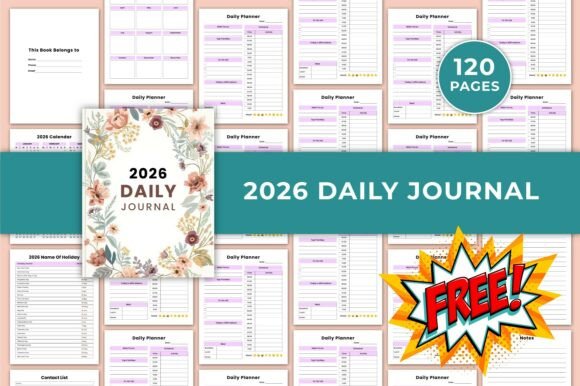
The 2026 year-at-a-glance calendar isn’t decorative — it’s functional. It includes U.S. federal holidays, major observances (like Juneteenth and Veterans Day), and blank spaces for personal milestones: contract renewals, course launches, family reunions. That same attention extends to the contact list pages: clean two-column layouts with space for phone, email, notes, and even a small icon placeholder — useful for therapists tracking client portals or small business owners managing vendor relationships. The monthly “Important Notes” section avoids overwhelming spreadsheets. Instead, it offers one dedicated page per month — enough room for quarterly goals, tax deadlines, or seasonal content calendars without clutter.
Daily Structure Without Sacrificing Humanity
Daily planner pages include an “Hourly Schedule (Morning to Night)” grid — but it’s intentionally uncluttered. There are no pre-filled time slots forcing artificial precision. Instead, it’s a flexible 7 a.m.–10 p.m. framework with light horizontal lines and ample white space. One user, a postpartum doula, added breastfeeding windows and nap times directly into the grid using Canva’s text tool — no redesign needed. Beneath that sits the “Main Focus / Top Priorities” section: three bold lines, not ten. That constraint encourages clarity over accumulation. Paired with the “To-Do List,” it creates a natural filter: if it’s not aligned with today’s top priority, does it truly belong on the list?
Nourishment, Mindset, and Data — All in One Place
Meal planning isn’t an afterthought here. The dedicated breakfast/lunch/dinner section uses simple checkboxes and lined space — enough to jot down ideas, prep notes, or grocery reminders, but not so much that it becomes another chore. Similarly, the daily affirmations line is short and centered — designed to be read aloud, not buried in paragraphs. Mood tracking appears as a subtle 5-point scale with optional keyword prompts (“energized,” “overwhelmed,” “curious”) — making reflection feel accessible, not clinical. These aren’t wellness add-ons; they’re integrated cues that support sustainable habits, especially during high-stakes periods like product launches or academic semesters.
Print-Ready, But Designed for Digital Flexibility
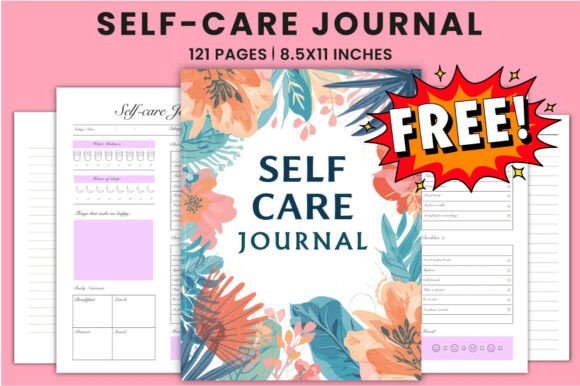
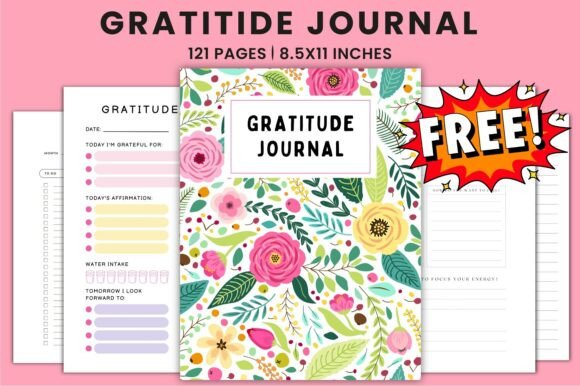
The final output is a 121-page printable PDF in standard US Letter size (8.5 × 11 inches), optimized for home or office printers — no bleed, no trimming guesswork. Yet the real advantage lies upstream: because it’s built in Canva, you can export individual pages as high-res JPG or PNG files. That’s invaluable for educators sharing weekly planning slides, coaches embedding journal prompts into digital courses, or KDP publishers creating interior previews. One blogger used the clean, minimalist design to generate Instagram carousel posts showing how she adapted the daily layout for her ADHD coaching practice — all within Canva, no extra tools required.
Who Benefits Most — and When to Consider Alternatives
This journal shines for creators, solopreneurs, and knowledge workers who need structure but reject rigidity — people who’ve outgrown bullet journals but still want room to think visually. It’s also ideal for small teams standardizing internal planning (e.g., marketing agencies using the contact + notes sections for client onboarding). However, if your workflow relies heavily on recurring task automation, embedded links, or cloud sync across devices, a digital-only app may better suit your needs. Likewise, those requiring accessibility features like screen reader compatibility or adjustable text sizing should test the exported PDF with their assistive tools first — while Canva supports alt text, final PDF accessibility depends on export settings.
Practical Tips for Getting Started
Start small: open the Canva file, duplicate the January daily spread, and customize just one element — maybe your header font or the color of the “Top Priorities” box. Then print that single page and use it for 48 hours. Notice what feels supportive and what doesn’t. Next, try adapting the meal planner for one week — no need to fill every slot. Over time, you’ll discover which sections become anchors (many users rely most on the hourly grid + priorities combo) and which stay as occasional tools (like mood tracking during transition periods). Because it’s fully editable, there’s no penalty for iteration — only the benefit of learning what works uniquely for you.
A Foundation, Not a Formula
The 2026 Daily Journal Canva KDP Interiors doesn’t promise transformation. It offers something quieter but more durable: a reliable, adaptable container for your time, attention, and intention. It respects that productivity looks different for a nurse scheduling shifts versus a writer drafting a novel versus a parent coordinating school pickups and therapy appointments. Its strength isn’t in prescribing how you should live — it’s in giving you the quiet confidence that your system can evolve as your needs do. And in a year that’s still unfolding, that kind of grounded flexibility may be the most valuable planning tool of all.