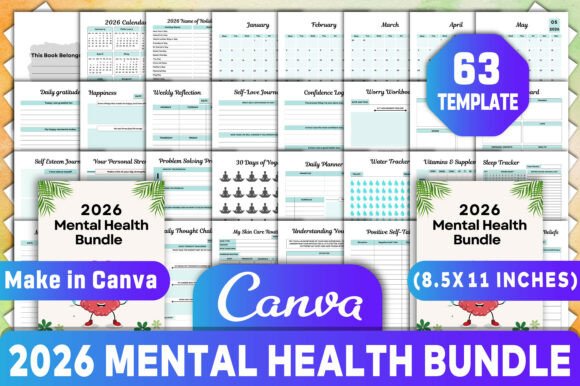
2026 Mental Health Bundle Canva KDP
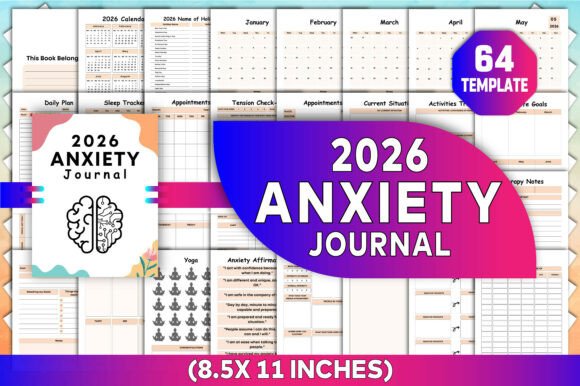
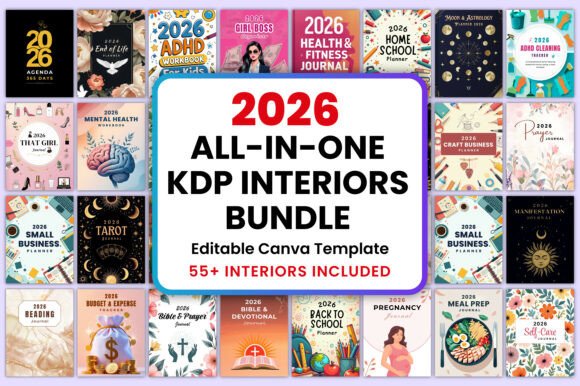
The 2026 Mental Health Bundle Canva KDP is a downloadable digital resource designed for creators and individuals seeking a customizable, print-ready interior for a mental health journal or planner intended for publication on Amazon Kindle Direct Publishing (KDP). It includes a complete set of interior pages—formatted to KDP specifications—with 2026-dated planning tools, trackers, reflection prompts, and therapeutic exercises. Unlike pre-printed journals, this bundle delivers editable Canva templates (PDF, JPG, PNG) alongside a final printable PDF, allowing users to adjust colors, fonts, layouts, and content before exporting for professional or personal use.
This bundle is not a physical product nor a subscription service. It is a one-time digital download containing structured, original page designs grounded in evidence-informed mental wellness practices—including cognitive behavioral techniques, mindfulness frameworks, habit science, and self-compassion principles. Its utility depends largely on how the buyer intends to use it: as a foundation for a self-published KDP journal, as a personal mental health tool, or as a starting point for client-facing resources in coaching or counseling contexts.
Who Might Find This Bundle Valuable?
Three primary audiences may benefit from evaluating the 2026 Mental Health Bundle Canva KDP:
- Self-publishers and content creators who want to launch a low-cost, timely mental health journal on KDP without designing from scratch. The inclusion of 2026-specific calendar and holiday data reduces research time and improves market relevance.
- Therapists, coaches, or wellness educators looking for adaptable, non-clinical tools to supplement sessions or distribute to clients—provided they modify content to align with their scope of practice and ethical guidelines.
- Individuals managing mental health proactively, especially those comfortable using digital tools like Canva and wanting more control over layout, privacy, and personalization than commercial journals offer.
Interest often stems from practical needs: avoiding copyright issues with stock templates, needing date-specific functionality (e.g., 2026 monthly spreads), or preferring editable files over static PDFs. It may also appeal to those prioritizing visual consistency across multiple trackers or seeking integration of clinical concepts—like core belief work or anxiety response mapping—into daily routines.
Key Benefits and Realistic Expectations
The bundle’s strongest advantages are flexibility and specificity. Because all files are editable in Canva, users can revise wording (e.g., changing “Antidepressant Boosters” to “Support Strategies”), adjust spacing for readability, or localize holidays. The 2026 calendar and dated planners eliminate manual updates. Trackers like the Medication Tracker, Sleep Tracker, and Anxiety Journal follow common clinical documentation patterns, supporting continuity of self-monitoring.
However, customization requires basic Canva proficiency. Users unfamiliar with layers, text boxes, or export settings may face a learning curve. While the bundle provides structure, it does not include instructional guidance on therapeutic implementation—for example, how to interpret mood trends or when to seek clinical support. It also assumes users understand KDP’s formatting requirements (e.g., bleed, margins, trim size) if publishing; no technical setup support is included.
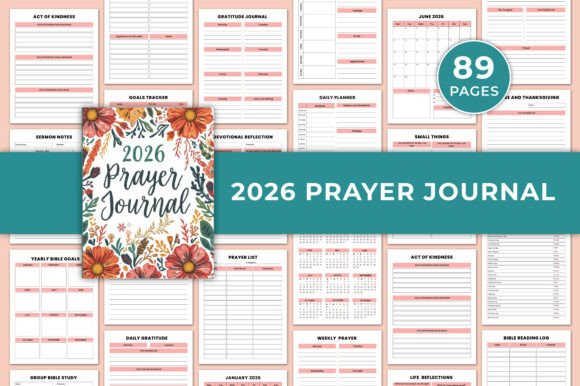
Additionally, while the content draws from established psychological concepts—such as gratitude practice, behavioral activation, and thought challenging—it is not a substitute for diagnosis, treatment, or licensed care. Pages like Understanding Yourself or Changing Negative Core Beliefs offer prompts, not guided interventions. Their effectiveness depends on consistent use and individual readiness—not just availability.
When This Bundle Is a Strong Fit
The 2026 Mental Health Bundle Canva KDP works well in scenarios where:
- You plan to publish a mental wellness journal on KDP and need a compliant, ready-to-adapt interior that’s both date-accurate and thematically cohesive.
- You prefer designing your own journal rather than licensing third-party templates with usage restrictions.
- You value having full ownership of the file and want to reuse or rebrand elements across multiple products (e.g., pairing it with a separate cover design).
- Your goals center on routine-building, self-reflection, or symptom tracking—and you’re comfortable interpreting patterns without built-in analytics or clinician feedback.
In these cases, the bundle saves time on layout and ensures alignment with KDP production standards—especially important for creators balancing volume and quality.
When Alternatives May Be More Appropriate
This bundle is less suitable if you:
- Need immediate, out-of-the-box usability without editing. Pre-printed journals or fillable PDFs with form fields may better serve users who want to start tracking right away.
- Require clinical validation or therapist-reviewed content. While the topics reflect widely accepted practices, the bundle lacks citations, outcome studies, or expert review—making it less appropriate for clinical or academic distribution without modification.
- Prefer analog tools exclusively. Though printable, the workflow assumes access to Canva (free or paid) and familiarity with digital editing—barriers for some.
- Seek integrated features like reminders, data visualization, or cross-tracker correlations. Digital apps (e.g., Day One, Bearable, or Woebot) offer dynamic analysis that static pages cannot replicate.
Also consider alternatives if your focus is highly specialized—such as trauma recovery, ADHD management, or bipolar disorder tracking—as this bundle offers broad, general-purpose tools rather than condition-specific protocols.
Making an Informed Decision
To determine whether the 2026 Mental Health Bundle Canva KDP aligns with your goals, ask yourself:
- What is my primary use case? If publishing on KDP is central, the bundle’s format and date specificity add clear value. If you only need personal use, weigh whether editing effort justifies cost versus simpler, free templates.
- Do I have the technical capacity to customize? Review Canva’s interface and test basic edits (e.g., changing a header font or adjusting a table width) before purchasing.
- What level of clinical support do I expect? This is a tool—not a guide. If you rely on explanations, examples, or facilitation notes, you’ll need to add those yourself or pair the bundle with external resources.
- How important is 2026 accuracy? For planners used across a full year, dated pages prevent errors. But if you prefer evergreen layouts or plan to reuse content beyond 2026, generic versions may offer longer-term utility.
Finally, examine the file list carefully: ensure it includes required elements (e.g., Doctor Visits, Medical History) and excludes redundant ones. Some users may find the breadth—over 40 distinct sections—supportive; others may see it as overwhelming without curation.
In summary, the 2026 Mental Health Bundle Canva KDP serves a specific niche effectively: creators and individuals who prioritize customization, KDP compatibility, and thematic breadth in a single, date-specific package. Its value emerges not from novelty, but from thoughtful consolidation—making it worth considering when your goals match its design constraints and intended applications.