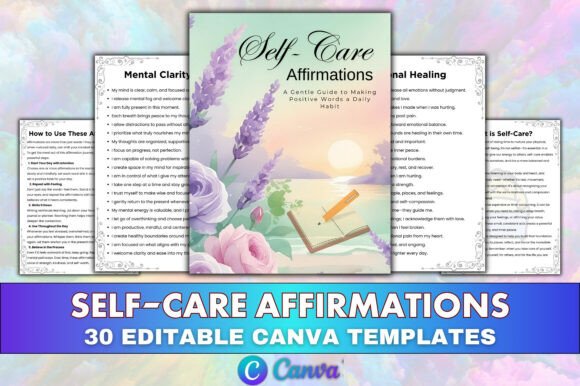
Self-Care 500 Affirmations: Your Gentle, Grounded Path to Lasting Inner Peace
Feeling emotionally drained, disconnected from yourself, or stuck in cycles of self-criticism? You’re not alone. Many adults today navigate chronic stress, burnout, boundary fatigue, or quiet grief — often without realizing how deeply these experiences erode emotional resilience and inner calm. What’s missing isn’t more productivity hacks or rigid routines — it’s a consistent, compassionate practice that reaffirms your worth, honors your limits, and gently reawakens your sense of safety within.
That’s where Self-Care 500 Affirmations steps in — not as a quick fix, but as a living, breathing toolkit for daily emotional restoration. This isn’t just another list of positive phrases. It’s a thoughtfully curated collection of 500 unique, mirror-and-say affirmations, each crafted to meet you where you are: whether you’re healing from overwhelm, rebuilding self-trust after years of people-pleasing, learning to rest without guilt, or simply craving more stillness in a noisy world.
What makes Self-Care 500 Affirmations especially effective is its intentional structure. Rather than overwhelming you with repetition or vague inspiration, it’s organized into 25 meaningful themes — including Emotional Healing, Self-Worth, Mindful Presence, Rest & Replenishment, Boundaries, Forgiveness, Body Trust, and Gentle Confidence. This design mirrors how real-life self-care unfolds: not as one-size-fits-all, but as responsive, layered, and deeply personal.
When You’re Facing Real-Life Challenges, This Is Where Affirmations Become Actionable
Consider these common situations — and how Self-Care 500 Affirmations meets them with practical support:
- You’re recovering from burnout. Instead of pushing through exhaustion, try the “Rest” or “Energy Protection” categories. Phrases like “I honor my need for stillness — it is never wasted time” or “My worth is not tied to my output” gently rewire the nervous system’s default “go-mode.”
- You struggle to set boundaries. The “Healthy Boundaries” and “Self-Respect” sections offer grounded, non-accusatory language — such as “Saying no with kindness is an act of deep care — for myself and others” — helping you practice assertiveness without shame.
- You feel disconnected from your emotions. Affirmations in the “Emotional Awareness” and “Inner Compass” themes invite curiosity over judgment: “I allow my feelings to move through me — they are messengers, not mandates.”
- You’re in therapy or coaching. Counselors and coaches regularly integrate Self-Care 500 Affirmations into sessions — assigning specific themed pages as between-session reflections, journal prompts, or grounding tools before emotionally charged conversations.
How to Use These Affirmations — Beyond Just Reading Them
The power of Self-Care 500 Affirmations lies in consistent, embodied practice — not passive consumption. Here’s how real users bring them to life:
- Start small — choose one theme per week. If anxiety spikes midday, begin with the “Calm Anchors” section. Read three affirmations aloud each morning, placing a hand on your heart. Repetition builds neural familiarity; embodiment builds trust.
- Pair them with existing habits. Tape a printed affirmation to your bathroom mirror (“I am safe in this moment”), add one to your phone lock screen (“My needs matter — I listen”), or slip a card into your planner before meetings (“I speak with clarity and compassion”).
- Use them in reflection journals. After writing about a challenging day, flip to the “Forgiveness” or “Self-Compassion” category. Choose one line that resonates — then write for 3 minutes: *What would it feel like to truly believe this?*
- Create ritual around rest. Before bed, select an affirmation from the “Nighttime Surrender” theme — like “I release what I cannot control — my peace is non-negotiable.” Breathe slowly as you say it. No analysis. Just presence.
Because Self-Care 500 Affirmations comes with high-resolution PDFs, JPGs, PNGs, and an editable Canva template, customization is effortless. Therapists print themed cards for clients. Coaches embed affirmations into digital workbooks. Journalers cut and paste into bullet journals. Parents adapt child-friendly versions from the “Gentle Confidence” or “Safety Within” sections. And creatives use the clean, minimal 8.5×11 layout to design calming posters for home offices or wellness studios.
Why Mirror-and-Say Language Makes All the Difference
Not all affirmations land the same way — especially when self-doubt runs deep. Generic statements like “I am confident” can trigger inner resistance if they feel disconnected from current reality. That’s why every affirmation in Self-Care 500 Affirmations uses gentle, present-tense, mirror-and-say phrasing: warm, believable, and anchored in felt experience.
Compare:
- Less effective (distant, abstract): “I will be fearless.”
- More effective (grounded, kind, immediate): “I breathe deeply — and let courage rise, softly, from within.”
Tailored Support for Different Needs — Without One-Size-Fits-All Pressure
Your self-care journey is yours alone — and Self-Care 500 Affirmations reflects that truth. A busy parent might turn to the “Parental Presence” or “Energy Renewal” themes during stolen five-minute pauses. Someone navigating grief may linger in “Tender Release” or “Sacred Patience,” allowing space for sorrow without rushing toward “closure.” A neurodivergent user might find relief in the “Sensory Safety” or “Pace & Permission” categories — affirmations that validate the need for predictability, quiet, or slower processing.
No theme assumes perfection. No affirmation demands forced positivity. Instead, Self-Care 500 Affirmations offers permission — to pause, to soften, to begin again — with dignity and grace.
If you’ve tried journaling, meditation apps, or boundary-setting guides — and still feel like something essential is missing — consider this: healing begins not with doing more, but with returning, again and again, to the quiet truth of your own worth. With Self-Care 500 Affirmations, that return is supported, structured, and deeply kind. It’s not about fixing yourself. It’s about remembering — gently, steadily — who you already are.