Why the 2026 Therapy Journal Is More Than Just a Notebook — It’s Your Compass for Emotional Growth
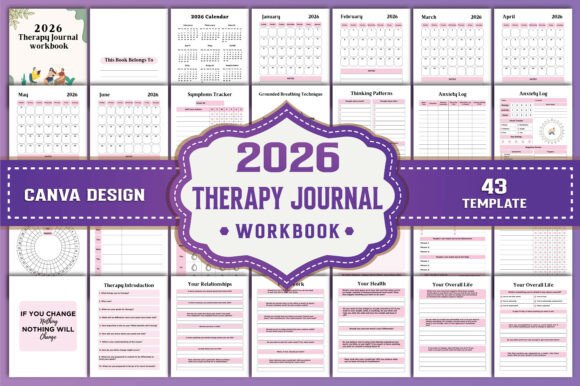
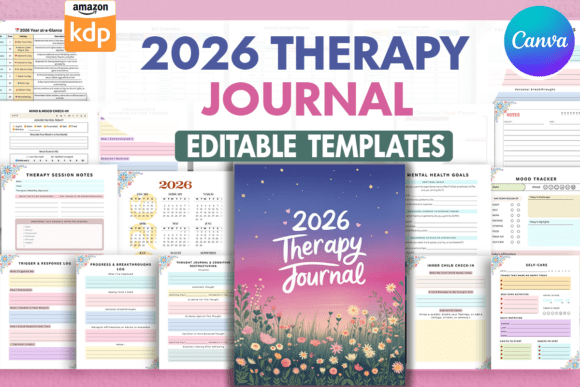
Imagine starting a new year not just with resolutions—but with intention, self-awareness, and gentle structure. The 2026 Therapy Journal – KDP Interiors isn’t another generic planner or bullet journal. It’s a thoughtfully designed, 120-page bleed-format workbook built specifically to support your mental wellness journey—whether you’re in therapy, exploring self-guided healing, or simply committed to deeper emotional literacy.
What Makes This Journal Different From Other Wellness Planners?
Many journals promise “self-care” or “mindfulness”—but few are grounded in evidence-informed therapeutic practices. The 2026 Therapy Journal – Heal, Reflect, Grow with Guided Support bridges clinical insight with everyday usability. Its layout doesn’t assume expertise; instead, it meets readers where they are—with compassionate prompts, clear frameworks, and space that invites honesty without judgment.
This isn’t about perfection. It’s about presence. Each page serves a purpose rooted in real-world mental health needs: tracking mood shifts, naming triggers, honoring inner child wounds, practicing cognitive reframing, and celebrating small wins that often go unrecorded in traditional calendars or apps.
A Year-Long Companion Designed for Real Life
At its core, the journal is structured around the rhythm of a full year—not as a rigid schedule, but as a living timeline of growth. The included 2026 Year-at-a-Glance Calendar features monthly layouts with U.S. holidays marked, helping users plan ahead while staying grounded in seasonal emotional patterns (e.g., winter fatigue, spring renewal energy, holiday stress).
Unlike digital tools that ping notifications or collect data silently, this journal asks you to pause—to write, reflect, and return. That tactile experience matters: research shows handwriting activates neural pathways linked to memory, emotional processing, and self-regulation more deeply than typing alone.
How Each Feature Supports Mental Wellness—Practically and Purposefully
Let’s break down how key sections translate into real-life benefits:
- Therapy Session Notes: A dedicated space to record topics discussed, coping strategies learned, homework assigned, and moments of insight—even if sessions happen weekly, biweekly, or sporadically. This helps reinforce learning and builds continuity between appointments.
- Mental Health Goals: Not vague aspirations like “be happier,” but scaffolded goal-setting across emotional, behavioral, and personal growth domains. Example: “Practice pausing before reacting when overwhelmed” (behavioral) paired with “Name three feelings I’m avoiding” (emotional).
- Thought Journal & Cognitive Restructuring: Based on principles from Cognitive Behavioral Therapy (CBT), this section guides users through identifying automatic negative thoughts, examining evidence for and against them, and crafting balanced alternatives—turning abstract concepts into daily practice.
- Progress Breakthrough Logs: Celebrates non-linear healing. Recovery isn’t always dramatic—it’s often quiet: noticing a trigger without spiraling, choosing rest over guilt, or speaking up after years of silence. These logs validate incremental change.
- Trigger Response Tracker: Moves beyond labeling triggers to exploring responses. What happens physically? Emotionally? Behaviorally? Then—what’s one small, kind action you could take next time? This cultivates agency, not shame.
- Inner Child Check-Ins: A powerful tool for those healing attachment wounds or early-life stress. Prompts like “What would my 8-year-old self need to hear today?” foster self-compassion and reconnection—not nostalgia, but repair.
- Boundaries Communication Tracker: Helps users notice where boundaries were honored, stretched, or violated—and reflect on communication style, consequences, and alignment with values. Especially useful for people-pleasers or those recovering from toxic relationships.
- Mood & Emotion Trackers: Daily check-ins go beyond “happy/sad” to include energy levels, social engagement, sleep quality, and physical sensations—revealing patterns that might otherwise stay invisible.
- Self-Care Wellness Pages: Integrates holistic care—not just bubble baths, but hydration, movement, screen time, rest cycles, and micro-moments of joy. Because wellness isn’t luxury; it’s maintenance.
- Mind Mood Daily: A concise, grounding ritual—just enough structure to begin and end the day with awareness, without overwhelm.
Who Benefits Most From This Journal?
While ideal for individuals actively engaged in talk therapy, the 2026 Therapy Journal is equally valuable for:
- Students managing academic pressure, identity exploration, and social transitions;
- Remote workers navigating isolation, blurred work-life boundaries, and burnout;
- Parents and caregivers rebuilding emotional reserves after years of giving;
- Creatives seeking clarity amid inspiration blocks or imposter syndrome;
- Anyone recovering from loss, life changes, or chronic stress—not because they’re “broken,” but because healing is active, intentional work.
Debunking Common Misconceptions About Therapy Journals
“I’m not ‘therapy material’—this isn’t for me.”
False. Therapy journals aren’t only for clinical diagnoses. They’re for anyone who wants to understand themselves better, reduce reactivity, build resilience, or simply show up more fully in their own life.
“If I don’t fill it perfectly, I’ve failed.”
Not true. This journal thrives on imperfection. Missed days? Scribbled margins? Tear-stained pages? Those are part of the process—not flaws. Its design intentionally avoids rigid grids or strict formatting so users can adapt it freely.
“Digital apps do the same thing—and faster.”
Apps offer convenience, yes—but they rarely replicate the embodied mindfulness of writing by hand, nor do most provide clinically aligned scaffolding. Plus, privacy concerns remain: your deepest reflections belong only to you—not cloud servers or algorithmic feeds.
Fitting Into Modern Life—Without Adding Stress
In an age of constant input and fragmented attention, the 2026 Therapy Journal offers something rare: permission to slow down *with direction*. It doesn’t ask for hours—just 5–10 minutes most days. And because it’s bleed-format (meaning designs extend to the edge of each page), it feels intentional, artistic, and immersive—not like another task on a to-do list.
For educators, HR professionals, and wellness coaches, it’s also a trusted resource to recommend—no clinical training required. Its language is inclusive, gender-neutral, trauma-informed, and culturally responsive, avoiding prescriptive advice in favor of open-ended inquiry.
Your Journey Starts With One Page
You don’t need to have all the answers to begin. You don’t need a diagnosis, a therapist, or even a clear idea of what “healing” looks like yet. What you do need is a safe container—and the 2026 Therapy Journal provides exactly that.
It’s more than paper and ink. It’s reflection made tangible. Growth made visible. Healing made human.
Whether you're stepping into therapy for the first time—or returning after years—the journal meets you with warmth, wisdom, and quiet strength. And as the year unfolds, you won’t just track time—you’ll witness transformation, one honest word at a time.