2026 Therapy Journal Workbook Canva KDP
If you're a therapist building your private practice, a life coach launching digital products, or someone managing anxiety, burnout, or life transitions—this isn’t just another journal. The 2026 Therapy Journal Workbook Canva KDP is a ready-to-use, deeply customizable tool designed for real-world emotional work—not perfection, not aesthetics alone, but grounded, actionable self-reflection and clinical support.
What It Really Is (Beyond the Buzzwords)
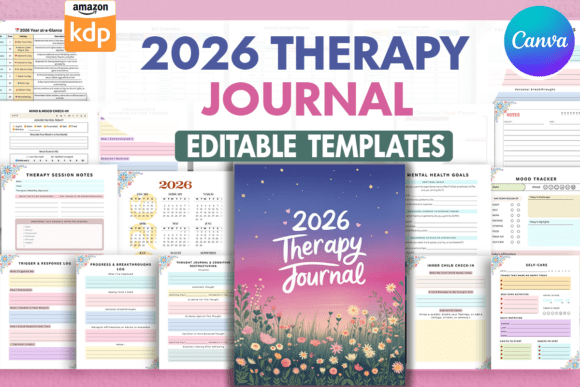
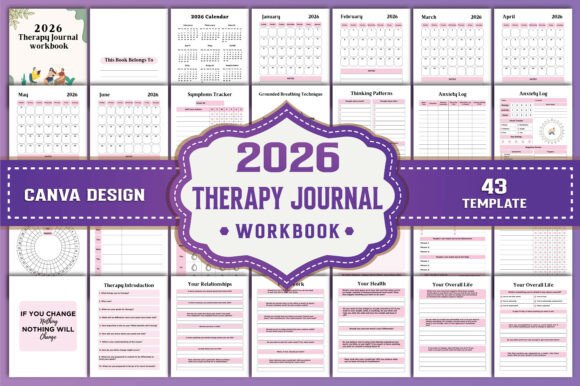
This isn’t a static PDF you print once and outgrow. It’s a full 43-page editable Canva template—with every page fully customizable in Canva (no design skills needed). You get high-resolution, print-ready files: a crisp 300 DPI PDF (8.5 x 11", no bleed), plus JPG and PNG versions for digital use or social sharing. And yes—it’s built for KDP: formatted to Amazon’s specs so you can publish your own branded version without wrestling with margins or bleed lines.
But what makes it different from generic planners? Every section serves a purpose rooted in evidence-informed therapy practices: mood tracking backed by behavioral activation principles, anxiety logs that help spot cognitive distortions, grounded breathing prompts tied to nervous system regulation, and safety planning pages modeled after clinical crisis protocols. It’s not “self-help fluff.” It’s structure with intention.
Where It Fits Into Real Life—Not Just Ideal Scenarios
Think about your Tuesday at 7:45 p.m.: You’ve had three back-to-back virtual sessions, your own to-do list is blinking red, and you’re mentally drafting tomorrow’s client notes while reheating last night’s dinner. That’s when having a pre-built, clinically thoughtful journal matters—not as another task, but as a time-saver with built-in scaffolding.
- For Therapists & Counselors: Use it as a take-home resource for clients working on CBT, DBT, or ACT skills. Customize the “Thinking Patterns” or “Worry Log” pages to match your treatment goals—or add your logo, contact info, and practice name before printing or emailing. No more reinventing worksheets each week.
- For Coaches & Wellness Educators: Launch your own branded journal on Amazon KDP in under a week. Swap out “My Safety Plan” for “My Growth Agreement,” rename “Medication Tracker” to “Supplement + Routine Tracker,” and adjust tone to fit your audience—all inside Canva. You keep 100% of the creative control—and the profits.
- For Individuals Managing Mental Health: Whether you're tapering off medication, navigating grief, rebuilding routines post-burnout, or simply trying to understand your sleep-worry-mood cycle, this journal meets you where you are. The “Yearly Mood Tracker” helps spot seasonal patterns; the “Monthly Reflection” prompts go deeper than “What went well?”—they ask, “What did I protect? What did I release?”
Who Uses It (and How It Shifts With Them)
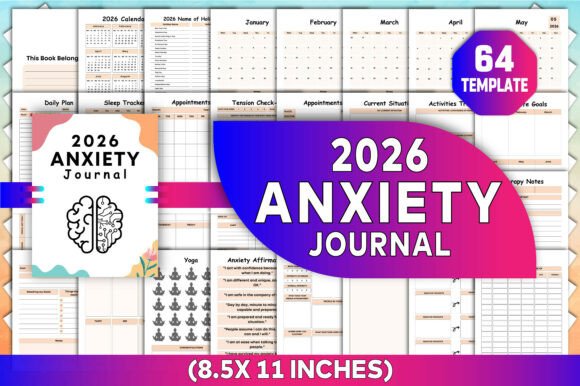
A freelance graphic designer recovering from chronic stress might lean hard into the Symptoms Tracker and Grounded Breathing Technique pages during deadline season—then switch to Your Relationships and Monthly Reflection when things slow down. A new mom managing postpartum anxiety might print just the Water Tracker, Sleep Tracker, and Anxiety Log as single-page handouts—no need to commit to the whole book.
A school counselor could adapt the My Safety Plan page for teen use—adding peer contacts, trusted adults, and coping strategies that resonate with Gen Z language. Meanwhile, a corporate HR professional piloting mental wellness programming might pull the Mindset Shift and Work-Life Boundaries sections into internal workshops—customizing examples to reflect hybrid work fatigue or meeting overload.
What to Consider Before You Download (or Publish)
This workbook shines when used with awareness—not as a replacement for therapy, but as a companion to it. If you're using it clinically, remember: tracking symptoms is only useful if it leads to insight or action. The journal includes space for “Notes” and “To Do List” not for busywork, but to bridge reflection and behavior change.
Also—while the Canva link gives you full editing freedom, it does require a free Canva account. Some users prefer offline tools like Adobe InDesign or Affinity Publisher, but those would mean reformatting from scratch. This version prioritizes speed and accessibility over advanced typography controls.
And though the file is print-optimized for KDP, double-check Amazon’s latest cover and interior requirements before publishing—platform guidelines update periodically, and small shifts in spine width or font embedding can delay approval.
Strengths That Go Beyond “Pretty Pages”
The 2026 Therapy Journal Workbook Canva KDP stands out because it balances flexibility with fidelity to therapeutic frameworks. You’re not choosing between “clinical” and “creative”—you get both. The Medication Tracker, for example, doesn’t just log doses; it leaves room for side effects, energy shifts, and mood correlations—so patterns become visible over time. The Relationships section avoids vague prompts like “How do you feel about your partner?” and instead asks, “When did I feel most seen this month? When did I withdraw—and what was happening right before?”
It’s also built for reuse. That “2026 Calendar” isn’t locked to January–December—you can delete months, duplicate pages, or rename them for quarterly reviews or 90-day challenges. The “This Book Belongs To” cover page? Editable font, color, and layout—so whether you're gifting it to a client, selling it on Etsy, or branding it for your podcast audience, it feels personal, not generic.
Small Gaps—And Why They’re Actually Helpful
There’s no guided meditation audio. No QR codes linking to video tutorials. No AI-powered insights or sync-to-app functionality. That’s intentional. This is a low-tech, high-trust tool—designed for moments when screens add stress, not relief. If you need integration with Apple Health or Google Fit, this isn’t the solution. But if you want something tactile, distraction-free, and adaptable to your pace—not an algorithm’s—then its simplicity is its strength.
It also assumes some baseline literacy around mental health concepts (e.g., “mindset shift,” “grounded breathing”). That’s great for folks already engaging in therapy or self-study—but if you’re supporting someone brand-new to these ideas, consider pairing it with a short orientation or glossary (which you can easily add yourself in Canva).
Final Thought—It’s Not About Filling Pages. It’s About Holding Space.
Whether you’re typing a custom note into the “Thank You” page for a client who showed up despite panic, checking off “drank water” three times before noon, or circling “overwhelmed” on the monthly mood tracker—what matters isn’t completion. It’s consistency. Curiosity. Compassion.
The 2026 Therapy Journal Workbook Canva KDP doesn’t promise transformation. It offers infrastructure—for noticing, naming, and gently redirecting. And sometimes, that’s the most powerful thing you can hold in your hands.