2026 Declutter Planner
Imagine starting 2026 with a plan that doesn’t just track time—but helps you reclaim space, energy, and focus. The 2026 Declutter Planner is more than a calendar or to-do list. It’s a thoughtfully structured system designed to support real behavior change: identifying clutter sources, scheduling manageable actions, and building habits that last beyond January.
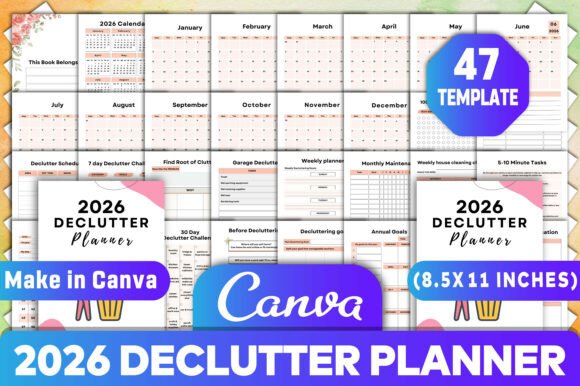
At its core, this planner blends practical planning tools with behavioral insights—like the 7-Day Declutter Challenge, the 30-Day Declutter Challenge, and the 100 Items Declutter Challenge. But it also includes deeper supports: a Root of Clutter reflection page, a Home Vision Board, and Room-by-Room Decluttering Checklists. Whether your clutter lives in a garage, a shared family kitchen, or a digital desktop, the structure adapts—not the other way around.
Why This Matters—Depending on Who You Are
What makes the 2026 Declutter Planner useful isn’t one-size-fits-all utility—it’s how flexibly it meets different needs.
For Beginners Just Starting Out
If you’ve ever stared at a closet full of clothes and felt paralyzed—not sure where to begin or how long it’ll take—the Daily 5–10 Minute Tasks and Before Decluttering prep pages are built for you. There’s no assumption of prior experience. The Clutter Identification Checklist helps name what’s really happening (is it emotional hoarding? decision fatigue? lack of storage?), while the Decluttering Goal worksheet grounds intentions in something measurable and kind.
For Busy Professionals & Remote Workers
Your home office doubles as a living room, your desk shares space with mail piles and yesterday’s coffee mug—and mental clutter often mirrors physical clutter. The Daily Planner and Weekly Planner integrate seamlessly with productivity rhythms, while the Habit Tracker and Home Maintenance Schedule help prevent small tasks from becoming overwhelming backlog. For someone juggling deadlines and domestic life, consistency matters more than perfection—and this planner supports rhythm over rigidity.
For Creators, Educators & Small Business Owners
This isn’t just a personal tool—it’s a creative asset. The included Editable Canva Template means you can adapt layouts for client workshops, classroom declutter challenges, or even your own branded digital product. Teachers might use the Family Chore Sheet and Cleaning Task Allocation pages to co-create responsibility systems with students. Coaches and organizers can layer their methodology onto the existing framework—adding prompts, reflection questions, or accountability checkpoints without rebuilding from scratch.
For Homeowners & Renters Managing Shared Spaces
Clutter rarely lives in isolation. The Garage Declutter guide, Seasonal Chores tracker, and Monthly Maintenance calendar help coordinate across seasons and stakeholders. If you’re negotiating space with a partner, kids, or roommates, the My Home Vision Board and Annual Goals sections offer neutral ground to align values—not just assign chores. Even renters benefit: the Bedroom Checklist and 5–10 Minute Tasks work regardless of lease length or renovation limits.
What Makes the KDP Interior Stand Out
The 2026 Declutter Planner Canva KDP Interiors deliver professional-grade print readiness *without* requiring design expertise. When you download, you get:
- A high-resolution PNG, JPG, and print-ready PDF (8.5 × 11 inches)
- An editable Canva link—no software install needed
- 47 fully customizable templates, each preserving layout integrity while allowing font, color, text, and image swaps
- Pre-filled 2026 content: holidays, calendar grid, monthly spreads—all accurate and ready
This isn’t a “print-and-go” PDF with locked layers. It’s a living document. A blogger updating their resource library can swap out headers and add affiliate notes. A freelance organizer can brand pages with their logo and service offerings. A parent can simplify language for a teen using the 30-Day Challenge as a summer project. Flexibility here isn’t theoretical—it’s baked into every template.
How People Actually Use It—Beyond the Checklist
Real usage looks different depending on context:
- A freelance writer uses the Daily Planner alongside the Habit Tracker to pair writing sprints with micro-decluttering—clearing one drawer before drafting a new section.
- A small business owner prints the Family Chore Sheet and laminates it for their team’s shared workspace, rotating responsibilities weekly using dry-erase markers.
- An educator adapts the Home Vision Board into a “Classroom Vision Board” activity, helping students define shared norms and physical space expectations.
- A new homeowner starts with the Garage Declutter and Seasonal Chores pages, then layers in the Annual Goals and Home Maintenance tracker as systems stabilize.
Is This the Right Fit for You?
Ask yourself:
- Do you prefer structure with room to breathe? This planner gives clear frameworks (e.g., Weekly House Cleaning Checklist) but leaves space for your voice, pace, and priorities.
- Do you value reuse and adaptation? If you’ve bought planners only to abandon them by March, the editable Canva files mean you can revise, repurpose, or rebuild—no wasted investment.
- Are you balancing multiple roles? Parent, worker, caregiver, creator—the Control Your Clutter and Daily Productivity sections recognize that energy is finite, and clarity comes from alignment—not overload.
It’s not for people who want pre-filled inspirational quotes or rigid daily affirmations. It’s for those who want to understand *why* clutter returns—and build sustainable responses. It works whether you’re decluttering a studio apartment or managing a multi-generational household. And because everything arrives as an original, editable file—not a flattened PDF—you retain full control over how, when, and where it serves you.
The 2026 Declutter Planner doesn’t promise transformation overnight. But it does give you the tools, timing, and gentle scaffolding to make meaningful progress—one room, one habit, one week at a time.