Autism Workbook 🧠 KDP Interiors
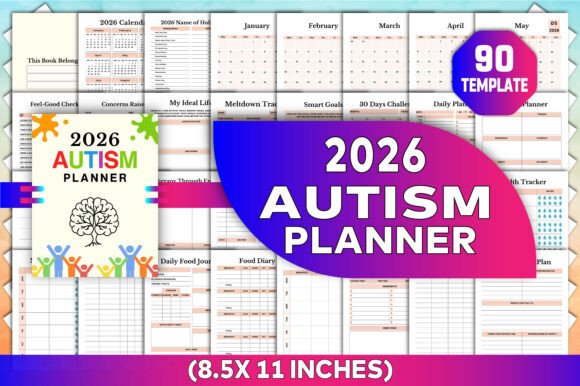
If you’ve ever watched a teen pause mid-conversation to quietly adjust their headphones—or seen an adult step away from a team meeting to reset in the hallway—you know neurodivergent experiences aren’t about “fixing” behavior. They’re about honoring how someone’s brain naturally works, and giving them tools that fit—not force. That’s where Autism Workbook 🧠 KDP Interiors steps in: not as a clinical manual or a one-size-fits-all curriculum, but as a gentle, customizable companion for autistic individuals (and the people who support them) to explore identity, needs, and daily resilience on their own terms.
Real Life, Not Role Play
This isn’t a workbook you complete and file away. It’s designed for moments when life feels loud, confusing, or emotionally tangled—and you need something immediate, visual, and kind. Think of it like a personal reference guide you return to again and again, not because you’re “behind,” but because your needs shift with context, energy, and growth.
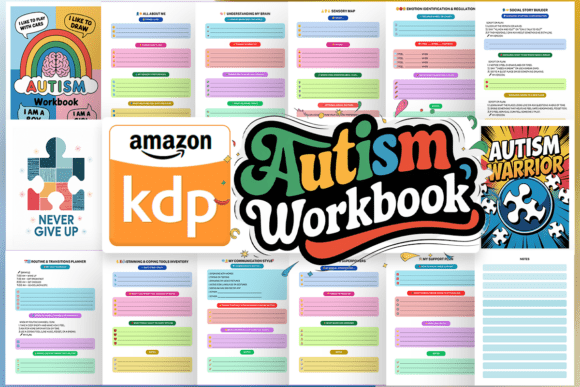
A 14-year-old uses the Sensory Map Preferences pages before school to jot down which classroom lights feel harsh, what texture of notebook cover helps her focus, and where she’ll go if the cafeteria noise spikes. She shares that map with her teacher—not as a list of complaints, but as a clear, visual invitation to collaborate. A 28-year-old newly diagnosed professional fills out the My Communication Style section before starting a new job: “I process best in writing. I may pause before answering questions. I prefer direct feedback over vague praise.” That page becomes part of her onboarding conversation—not as a disclosure of deficit, but as a practical agreement for mutual understanding.
Who Finds It Especially Helpful—and Why
Parents and caregivers often tell us they reach for the Routine Transition Planner during back-to-school season or after a move—times when predictability unravels fast. Instead of scripting every minute, they co-create flexible templates with their child: “What’s one thing we can keep the same? What’s one new cue that helps you notice change is coming?” The editable Canva pages mean they can add photos, swap icons, or simplify language without design skills.
Therapists, counselors, and special educators use the Social Story Builder not as a script to rehearse, but as a scaffold for co-authoring meaning. One speech-language pathologist shared how she used it with a non-speaking 10-year-old and his AAC device: they built a story together about asking for space using core words and custom images—and then printed it as a laminated card he could hand to peers or staff. No assumptions. Just shared agency.
Adults navigating self-discovery (especially late-diagnosed women and gender-diverse folks) gravitate toward the All About Me Pages and Understanding My Brain sections. These aren’t quizzes with right/wrong answers—they’re invitations to reflect without judgment. “What makes me feel safe *today*?” might be different than last month. “What’s a strength I’ve overlooked because it doesn’t match ‘typical’ definitions of competence?” That question alone has sparked journal entries, career pivots, and deeper boundary-setting in relationships.
When It Fits Smoothly Into Daily Flow
- During low-spoon moments: The emotion charts and calming tool prompts are intentionally simple—no complex introspection required. Just point, circle, or type one word. That lowers the barrier when executive function is running thin.
- In transition-heavy seasons: Starting college? Moving apartments? Navigating a relationship shift? The Routine Transition Planner helps name what’s changing—and what can stay grounded—without demanding perfection.
- Before advocacy conversations: Whether requesting accommodations at work, explaining needs to a partner, or preparing for an IEP meeting, having concrete examples (“Here’s what overwhelm looks like for me—and here’s what helps”) shifts the dynamic from explanation to collaboration.
- As a bridge between supports: A school counselor emails a completed Stimming Coping Tools Inventory to a parent and occupational therapist—not to “track” behavior, but to align around what’s already working and how to expand it safely.
Things to Keep in Mind Before You Begin
The Autism Workbook 🧠 KDP Interiors works best when approached with curiosity—not completion pressure. Some users fill one page and return weeks later. Others revisit the same section across years, noticing how their answers evolve. That’s by design.
It’s also important to recognize what this workbook doesn’t do: it doesn’t replace clinical support for co-occurring conditions like anxiety disorders or ADHD; it doesn’t diagnose; and it’s not intended as a standalone intervention for crisis situations. If someone is regularly overwhelmed to the point of shutdown or meltdowns, pairing this tool with trusted professional guidance adds crucial layers of safety and strategy.
And while the editable Canva pages offer flexibility, they do require access to Canva (free tier works fine) and basic comfort with digital editing—so if someone prefers pen-and-paper, printing the static PDF version first is a perfectly valid starting point. Many users begin there, then digitize only the pages they want to adapt or share.
Strengths That Show Up in Practice
What makes this more than just another printable? First—neurodivergent co-creation. The prompts avoid pathologizing language (“What behaviors do you need to stop?”) and instead center agency (“What helps you feel steady? What’s one way you’d like others to notice when you’re reaching capacity?”).
Second—visual accessibility without oversimplifying. Icons, color-coding, and spacing support processing, but the content itself respects complexity. The Emotion Identification & Regulation section doesn’t just name feelings—it invites reflection on triggers, physical cues, and layered responses (“I feel frustrated AND exhausted AND unseen”).
Third—scalable relevance. A 9-year-old might draw pictures on the All About Me page. A 42-year-old might paste screenshots of favorite apps, list sensory-friendly clothing brands, or write a short manifesto about their communication boundaries. Same structure. Different depth. Same respect.
Not Every Page Will Resonate Right Away
That’s okay. One user shared she skipped the Social Story Builder for months—“felt too prescriptive”—until she needed to explain why she couldn’t attend her sister’s wedding reception. Then she opened it, adapted a template for “Large Gatherings,” added her own script (“I’ll join for dinner, then step outside for quiet time”), and printed it on a small card. The usefulness wasn’t in the format—it was in having a place to start when the stakes felt high.
Another noted the Stimming Coping Tools Inventory helped her reframe stimming not as “something to manage” but as “a reliable source of regulation I already have.” She added glitter pens, weighted lap pads, and even specific YouTube ASMR channels—then used that list to advocate for sensory breaks during long virtual meetings.
These aren’t edge cases. They’re reminders that the Autism Workbook 🧠 KDP Interiors meets people where they are—not where a checklist says they “should” be. It’s less about filling boxes and more about building a living document of self-knowledge: one that grows, changes, and holds space for all kinds of autistic experience—with warmth, clarity, and quiet celebration.